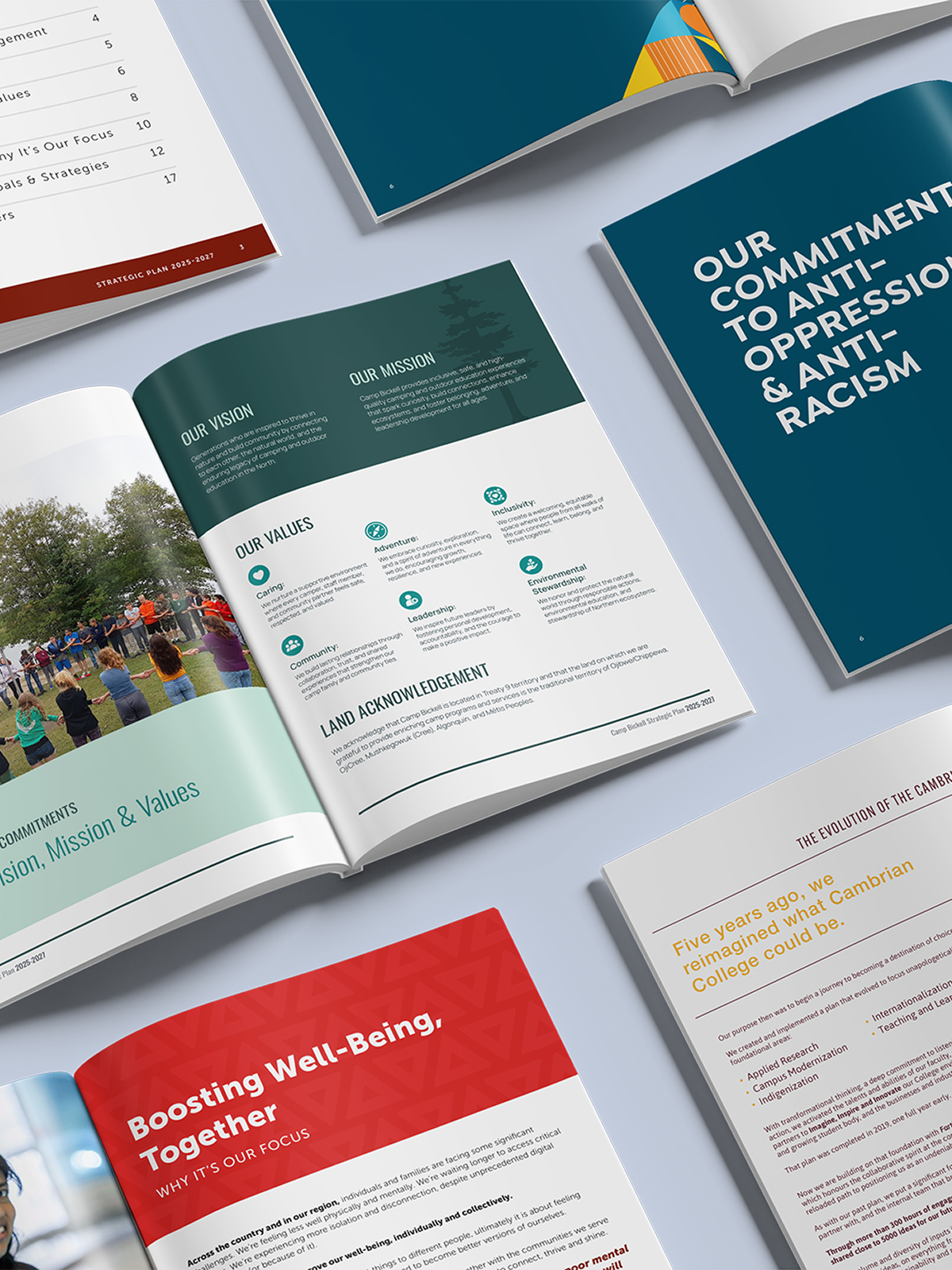
Nobody Ever Yelled At An Annual Report
The best stories don't explain everything upfront. They give audiences something to care about, a reason to keep paying attention, and room to draw their own conclusions. For organizations, that means rethinking how we approach brand storytelling, annual reports, and strategic communications.
We’ve all done it. Someone on screen picks up a flashlight and heads for the basement. You say out loud, brooo, don’t go down there.
Nobody's ever said anything out loud to an annual report.
You yelled because somebody showed you what was in the basement. The person with the flashlight didn’t know. You did. You had a stake in how this turned out and no way to help. So you flipped out at your TV.
That’s what involved feels like.
Why Organizational Storytelling Often Fails to Engage
Now think of the last annual report that crossed your desk. Somewhere near the front, it says the organization had a challenging year. One sentence later, the team has come together and results have exceeded expectations. Then one more sentence shows up to tell you what you just read. This is why we do what we do.
Whatever nearly went wrong that year got one adjective, and someone had already stick handled the meaning. You were left with nothing to do but nod. And doze.
Most organizations hide the danger and explain the meaning. Good stories do it the other way around.
The danger gets hidden for a reason. And it makes people nervous in approval meetings. It feels like the work isn’t finished. But a report with no danger in it tells the reader everything is under control. And then asks them to care?
The Difference Between Mystery and Confusion in Marketing
Saying less won’t fix it either. In October, Warner Bros. released Digger, a Tom Cruise satire with a $125 million production budget. The first teaser showed Cruise in cowboy boots, dancing with a shovel. Even a later trailer kept much of the plot under wraps. The director wanted people surprised. It opened to $8 million, Cruise’s weakest start in nearly 20 years. The mixed reviews didn’t help, but consider that part of the bigger issue was that a lot of people couldn’t tell what they were being invited to.
In the summer of 2024, Longlegs kept a secret too. Its marketing hid the killer’s face. One teaser showed its star seeing him for the first time, a small mic taped to her chest, with her actual heartbeat on the soundtrack. Her pulse jumped from 76 to 170. You never saw what she saw. You knew exactly what you were in for. The film cost about $10 million and made $128 million.
An audience will wait a long time for an answer. Not so much for a question.
How to Use Tension to Make Brand Stories More Engaging
So on the next story you tell, take us down to the basement for a spell. Show us the week you weren’t sure you’d make it before you show us the record year. Let it sit.
Then go to the end and find the sentence that explains what the story meant. It'll start with “this is why.” Kill it. Pixar’s Andrew Stanton calls this giving people two plus two instead of four. If the story worked, the reader is already there. If it didn’t, that sentence won’t save it.
Why Effective Communications Leave Room for the Audience
I still write that sentence. I’ve written drafts of this newsletter that end by explaining their own ending, and I’ve done it to client copy more times than I can count.
That sentence usually gets written for the people in the approval meeting. The reader never asked for it.
None of this applies to what you need people to do, or to the facts they’re owed. Those go out plain as day, as soon as you can confidently stand behind them. Nobody in a crisis wants suspense.
I had a last line here explaining what all this means.
I cut it.
FAQs
Where this gets practical
Clear answers to the questions that come up when strategic thinking meets real-world decisions.
Let us know what problems or ideas you’re thinking about, we’d love to chat.
How can organizations make annual reports more engaging?
Move beyond polished summaries of achievements. Show the challenges, decisions, and uncertainties that shaped the results. Give readers a reason to care about the outcome.
Why is tension important in brand storytelling?
Tension creates curiosity and emotional investment. When audiences understand what's at stake, they're more likely to stay engaged and remember the story.
What's the difference between creating curiosity and withholding information in marketing?
Curiosity gives audiences a clear question worth exploring. Withholding too much information leaves them confused about why they should care. Effective marketing creates intrigue without sacrificing clarity.
How can strategic communications avoid overexplaining?
Trust the audience to connect the dots. Present the relevant facts, decisions, and outcomes, then remove unnecessary statements that tell readers what they're supposed to think.